Gold guides
Yellow, white and rose gold: what is the difference?
Yellow, white and rose gold compared: what each is made of, rhodium plating, durability by carat, diamond settings, skin tone and mixing metals.
4 min readChecked
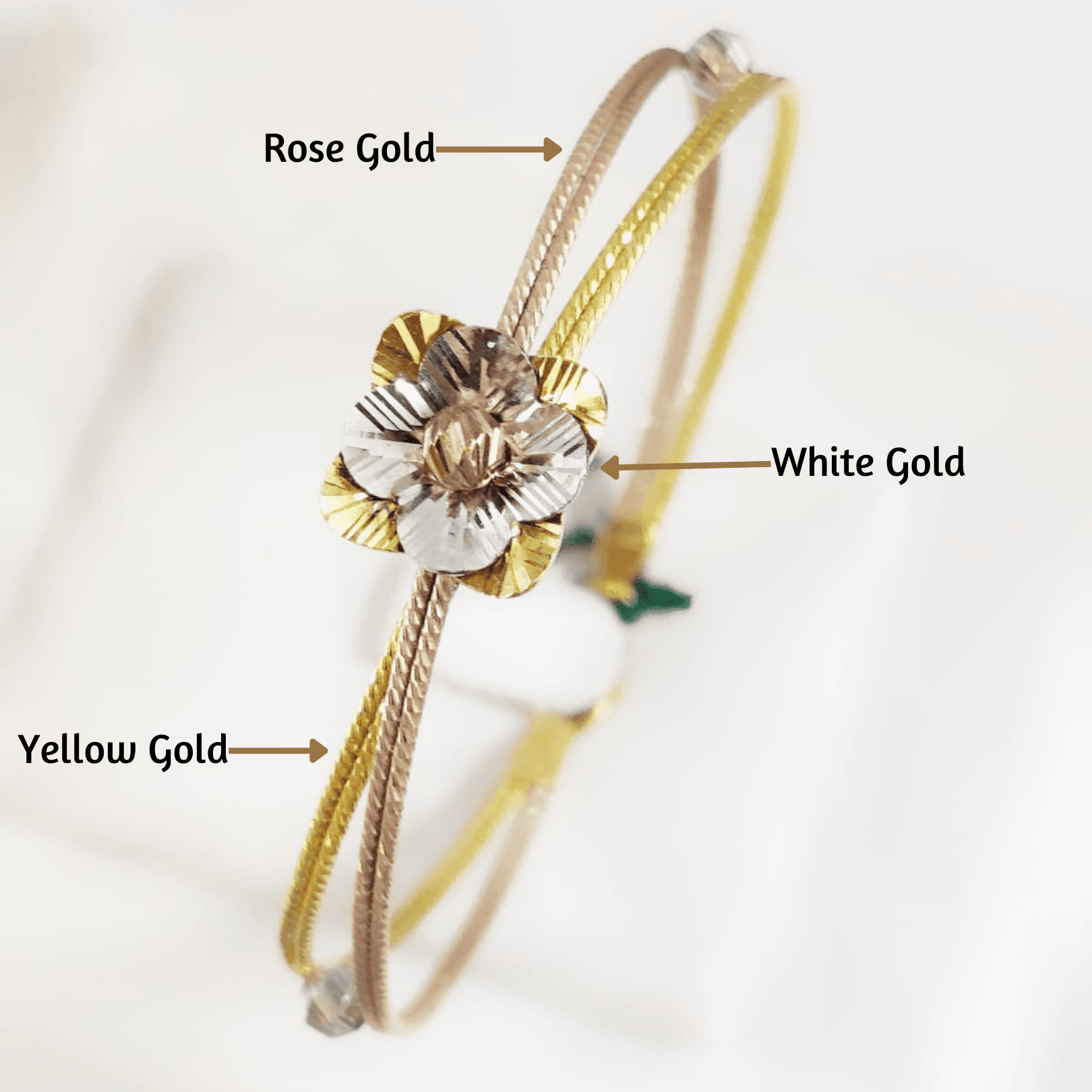
All gold starts out yellow. White gold and rose gold are still real gold, mixed with different metals to change the colour. The carat tells you how much gold is in the piece, and the colour tells you what the rest is made of.
At Shreeji Jewellers we stock 22ct, 18ct and 9ct gold. 22ct is almost always yellow; white and rose gold are usually 18ct or 9ct. Here is how the three colours differ and how to choose between them.
How the colour is made
Gold for jewellery is mixed with other metals, called the alloy. The alloy adds strength and, depending on what is used, shifts the colour.
| Colour | Main alloy metals | What it looks like |
|---|---|---|
| Yellow gold | Silver and copper | Warm yellow; deeper the higher the carat |
| White gold | Palladium, silver, sometimes nickel; usually rhodium-plated | Bright white, similar to platinum or silver |
| Rose gold | Mainly copper, some silver | Warm pink to reddish, depending on the copper |
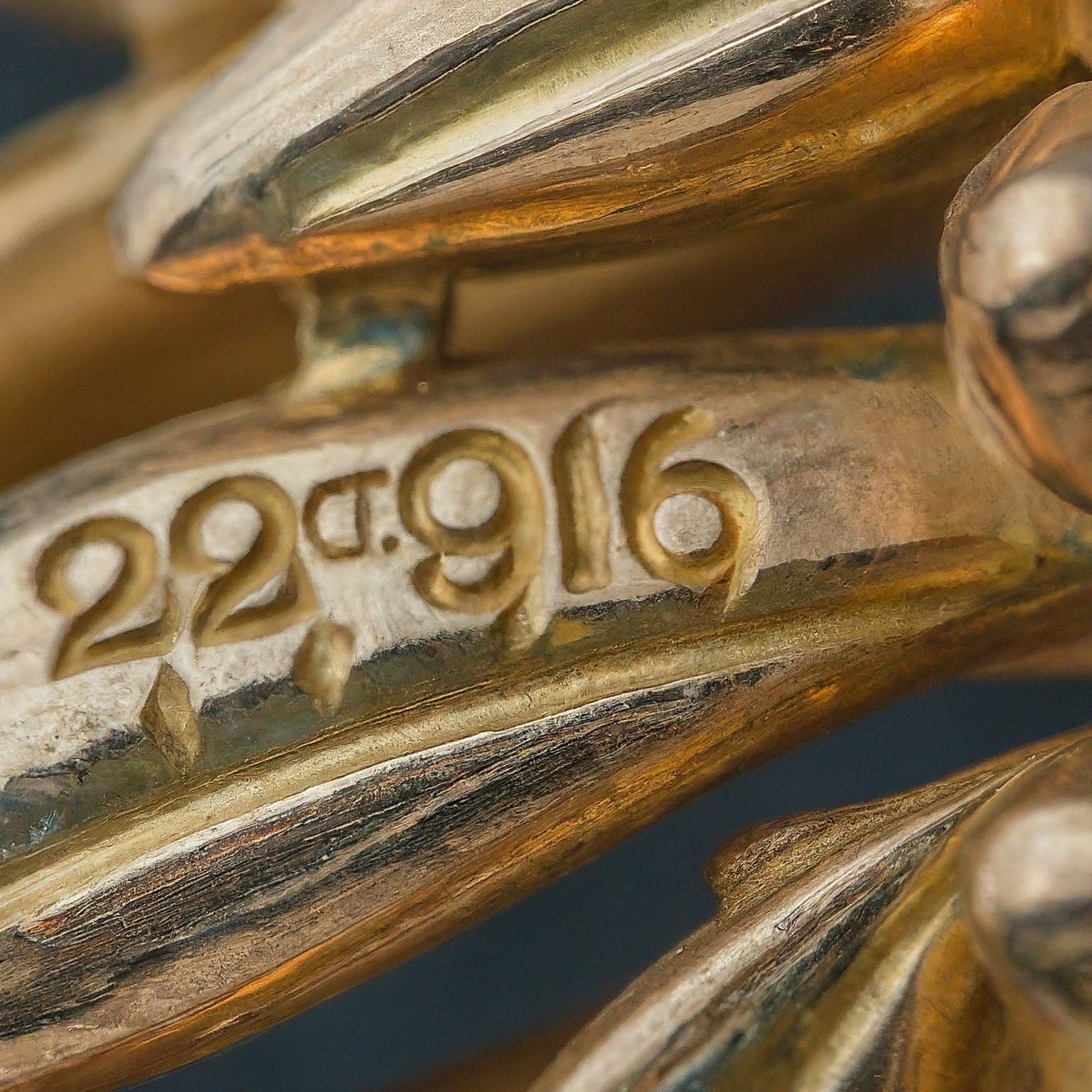
The carat stays the same regardless of colour. 18ct white gold, 18ct rose gold and 18ct yellow gold all contain 75% gold and are all stamped 750.
This is also why 22ct only really comes in yellow. With 91.6% gold, there is not enough room in the alloy to change the colour much. Where you see white or rose detail on a 22ct piece, it is usually a plated or separately made section, like the white-gold accents on two-tone bangles.
Yellow gold
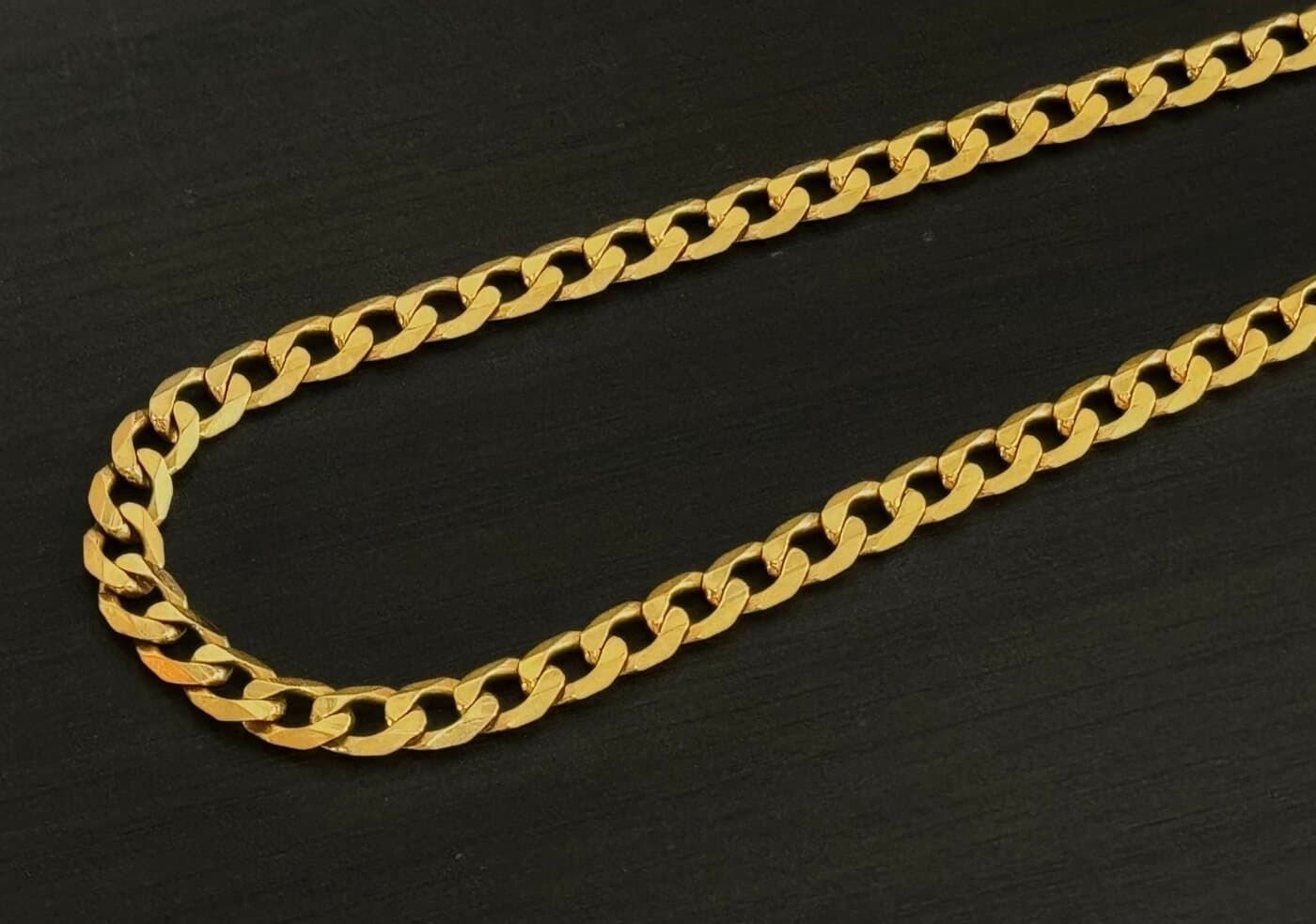
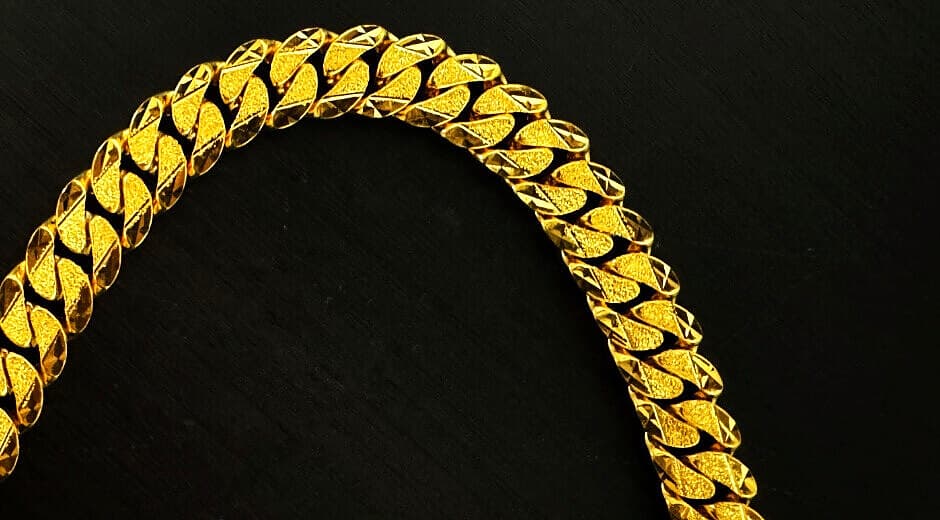
Yellow gold is the traditional colour and the one most Fiji families think of as gold. In 22ct it is a deep, warm yellow; in 18ct a bright yellow; in 9ct noticeably paler.
Wear: yellow gold needs no plating, so it keeps its colour all the way through. 22ct is rich and pure, so treat it kindly. Our post on 22ct vs 18ct vs 14ct gold compares the carats in detail.
White gold
White gold is gold mixed with white metals such as palladium and silver. On its own, this mix is a pale grey with a faint warm tint, not pure white. To give it a bright white finish, most white gold jewellery is plated with rhodium, a hard, white metal from the platinum family.
Wear: the gold underneath is durable, but over time the rhodium finish can soften where a ring rubs most. Re-plating brings back the bright white; bring the piece in and ask us what we can do.
Some white gold alloys contain nickel, which a small number of people react to. If you have a nickel allergy, mention it when you are choosing.
Rose gold
Rose gold gets its colour from copper. More copper gives a deeper, redder shade; less gives a softer pink. Because the colour comes from the metal itself, not a plating, it does not wear off.
Wear: copper is a hard metal, so rose gold is at least as durable as yellow gold of the same carat. Over many years the colour can deepen slightly as the surface ages, which many people like. Several of our diamond rings are set in rose gold, which gives a warm, softer look than white.
Which colour suits diamonds
- White gold is the classic choice for diamond rings. White claws around a colourless diamond make it look whiter and brighter.
- Yellow gold gives a warmer, traditional look. It can make a diamond with a faint tint look more even, because the stone picks up some warmth from the setting anyway. Many yellow gold rings have the diamond held in white gold claws to keep the stone looking white.
- Rose gold is a softer, warm choice that suits round and cushion-shaped clusters well.
Most diamond engagement rings are made in 18ct, which is hard enough to hold the stones securely. Our diamond engagement ring guide covers the rest of the choice.
Skin tone: a simple guide
People often ask which colour suits their skin. The honest answer is that any colour can look good on anyone, and the best test is to try them on. Still, a few general points help.
- Look at the veins on your inner wrist in daylight. If they look more green, your skin likely has warm undertones, and yellow and rose gold often look especially good. If they look more blue or purple, your undertones are likely cool, and white gold often looks crisp and clean. If you cannot tell, you probably have neutral undertones, and all three will suit you.
- Think about what you already wear. If your favourite pieces are yellow gold, a new ring in white gold may not sit well next to them.
- Try them side by side. Hold yellow, white and rose pieces against the back of your hand, ideally near a window, and see which you keep coming back to.
Mixing metals
Wearing more than one colour of gold is common now, and it can look deliberate rather than accidental.
- Use a bridge piece. A two-tone bangle or a ring with two colours ties yellow and white pieces together.
- Repeat each colour. A white gold ring with yellow gold bangles looks more planned if the white appears somewhere else too, such as earrings or a pendant.
- Think about the long term. If you will wear your wedding ring every day for years, choose a colour that sits well with the gold you already own, such as 22ct bangles from your wedding.
At the counter
When you come in, ask to see the same style in more than one colour so you can compare them on your own hand. Tell us which carat you are looking at and how often you will wear the piece, and we will help you choose the one that suits how you will wear it.