Weddings & traditions
The jhumka: a short history and how to wear one
Where the bell-shaped jhumka earring comes from, the main styles from stud-top to bali and chandbali, and how to choose and wear 22ct gold jhumkas.
4 min read
Few pieces of jewellery move like a jhumka. The bell-shaped drop swings as you turn your head, the little beads along its edge catch the light, and the whole earring seems to dance. It's no surprise the jhumka has been loved for centuries, and that it appears at almost every Fiji Indian wedding.
What makes a jhumka a jhumka
A jhumka has two parts:
- The top, which sits on the earlobe. It can be a stud, a hook or a hoop (a bali).
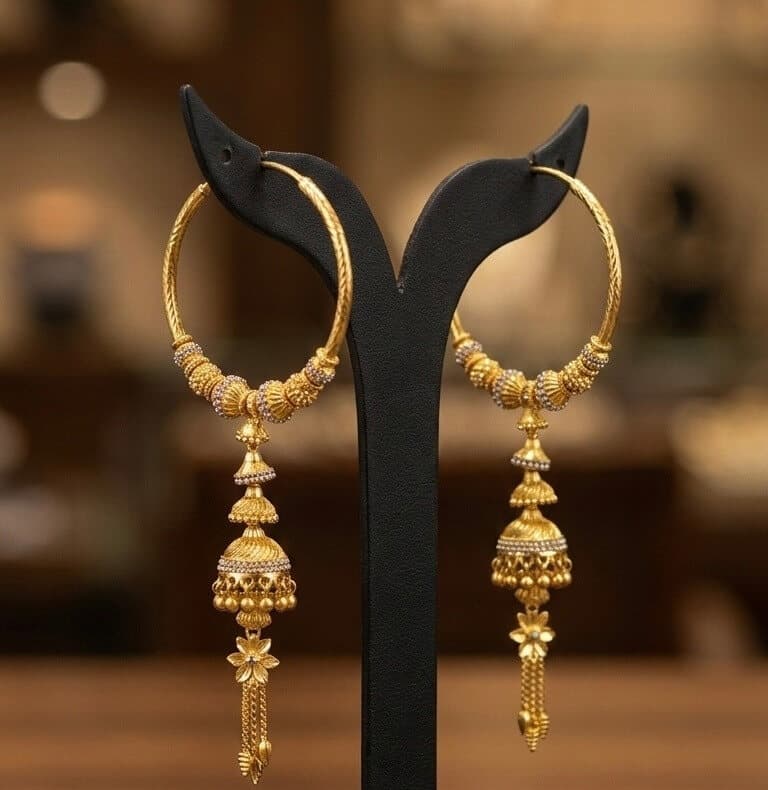
- The bell, a dome or cone shape that hangs below. The rim of the bell is often edged with a fringe of tiny gold balls, called ghungroo-style beads, that move and catch the light.
The name is usually linked to the Hindi word jhoomna, to swing or sway, which describes exactly what the earring does.
A little history
Bell-shaped earrings have a long history in India. Earrings of this kind are often pointed out in old temple sculpture, and the style was much loved in the royal courts, where jewellers made ever more detailed versions with filigree, enamel and gemstones. In South India, the jhumka became part of temple jewellery, the ornate gold jewellery made in the style of the ornaments on temple deities and worn by classical dancers.
When families travelled from India to Fiji from 1879, they brought their jewellery traditions with them. Today the jhumka is as much a part of a Fiji Indian bride's look as the bangles and the mangalsutra.
The main styles
Stud-top jhumka
The classic design: a flat, decorated stud on the lobe with the bell hanging just below. Small stud-top jhumkas are light enough for every day, while larger ones are made for weddings and pujas.
Bali jhumkas
A gold hoop, or bali, with a jhumka hanging from it, like the pair in the photo above. They are bolder and swing more, and they suit an open neckline or hair worn up. Some designs have several tiers of small bells.
Chandbali jhumka
A chandbali is a crescent-moon shaped earring (chand means moon). Some designs combine the crescent with a small bell underneath, which makes a wide, dramatic earring that frames the face.
Layered and tiered jhumkas
Two or three bells stacked one above the other, or a cluster of bells, for a long, festive look. These are statement earrings, usually worn with a bridal or party outfit.
Light everyday jhumkas
Small, simple bells on a short hook or stud. These are the jhumkas you can wear to work, to the shops or under a scarf, and they're a lovely first pair for a teenager.
How jhumkas are decorated
You'll see the same bell shape finished in many ways:
- Plain polished gold, which lets the shape speak for itself.
- Filigree, fine twisted gold wire formed into open, lacy patterns.
- Two-tone, with white gold beads or bands against yellow gold.
- Stone-set, with coloured stones or small white stones around the top.
- Antique finish, where the recesses are darkened so the raised pattern stands out.
Our guide to gold finishes explains these in more detail.
Choosing a pair
Size and face shape
As a rough guide, round faces suit longer, narrower jhumkas, while long or oval faces suit wider designs such as chandbalis. Try a few on and look in the mirror from a little distance, not just up close.
Weight
Jhumkas in 22ct gold can be heavy, especially wedding pairs. Hold them in your hand before you decide and think about how long they'll be worn. If the bride will wear them all day, ask to see lighter designs too, and plan to take them off between events.
Matching the set
If the jhumkas will be worn with a bridal necklace set, bring a photo of the set, or choose them together. Look at the colour of the gold, the finish and any stones so they work as one look. Our bridal necklace sets page has more on choosing a set.
Wearing jhumkas every day
Jhumkas aren't just for weddings. A small gold pair looks beautiful with a plain kurta, a white shirt or a simple dress. Keep the rest of your jewellery quiet, perhaps a fine chain and a single bangle, and let the earrings do the talking. Our guide to wearing 22ct gold with modern outfits has more ideas.
Looking after them
The fringe of small beads on a jhumka can catch on hair and fabric, so put your earrings on last and take them off first. Store each pair on its own so the bells don't tangle or dent, and wipe them with a soft dry cloth after wearing. Our 22ct gold care guide has more tips.
Jhumkas at Shreeji Jewellers
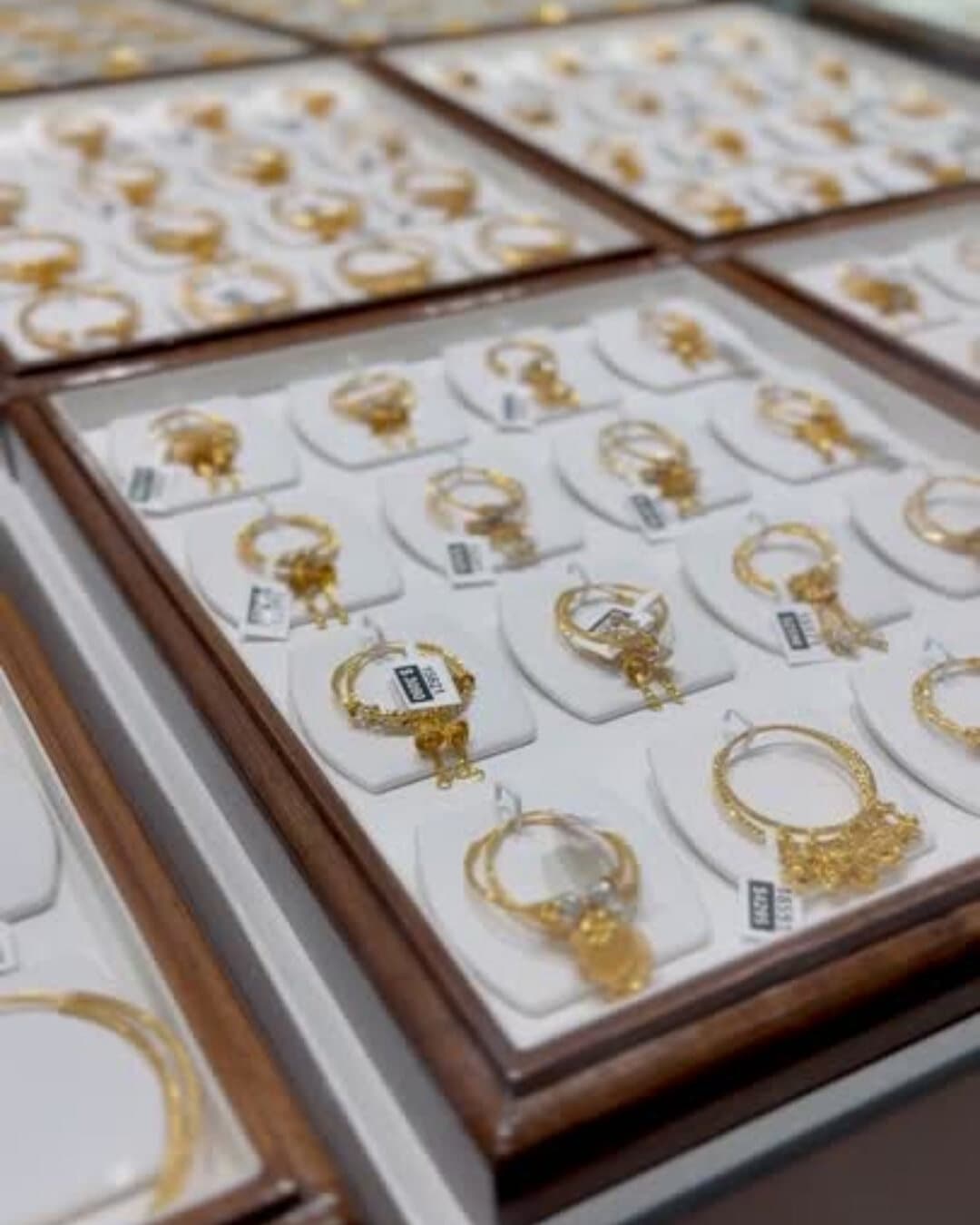
We keep trays of 22ct gold jhumkas at our shop on Main Street, Nadi, from light everyday pairs to full wedding designs, and every 22ct piece is stamped 916. You can see more on our gold earrings page. Come in and try a few styles on, and tell us what you'll be wearing them with so we can help you choose.