Weddings & traditions
Fiji Indian wedding jewellery: a guide for families
The bridal 22ct gold set, mangalsutra and rings: what families commonly give, how to choose size and design, and how to mix in heirlooms.
6 min read
If there's a wedding coming up in your family, the jewellery conversation has probably started already. Who is buying the set? Should the bangles match the ones Nani wore? How grand should the set be? And if half the family lives in Sydney, Auckland or Vancouver, who is actually going to walk into a shop and choose?
This guide covers the main pieces in a Fiji Indian wedding, how families commonly share the giving, and how to choose size and design so the jewellery is worn and loved long after the day. Every family does things its own way, so treat this as a starting point for your own family's discussion, not a rulebook.
The main pieces
The bridal set: necklace, earrings and bangles
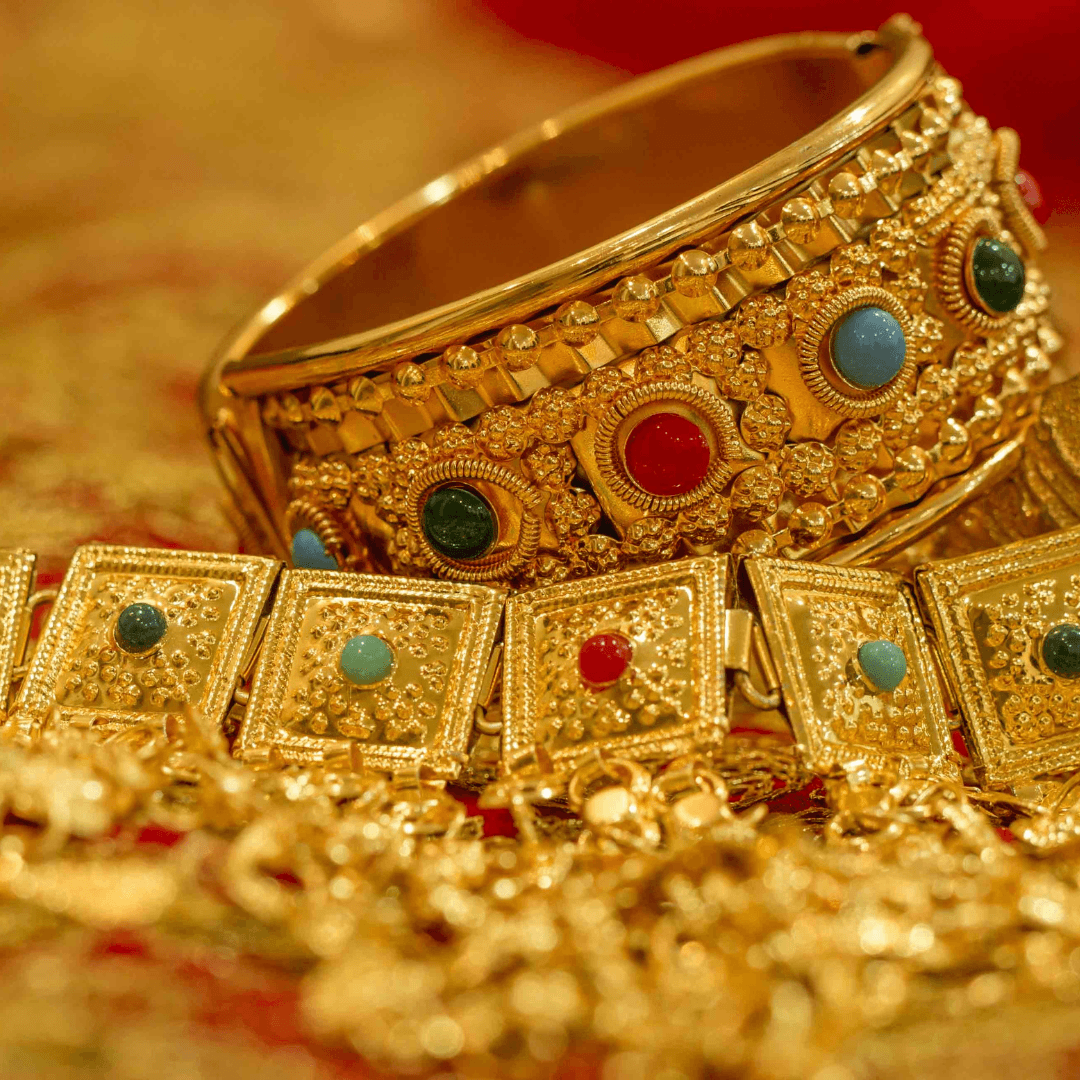
For many Fiji Indian brides, the centrepiece is a 22ct gold set: a necklace with matching earrings, usually worn with bangles. 22ct gold is stamped 916, meaning 91.6% gold, and it has the deep yellow colour most families expect at a wedding. If the numbers on the stamp are new to you, our post on what 22ct actually means explains them.
Gold carries meaning beyond its looks. In Hindu tradition it is associated with Lakshmi and prosperity, and families have long given a bride gold to wear and to keep as her own, a form of security that belongs to her. In many Indian communities, bangles are also a traditional sign of a married woman.
The mangalsutra
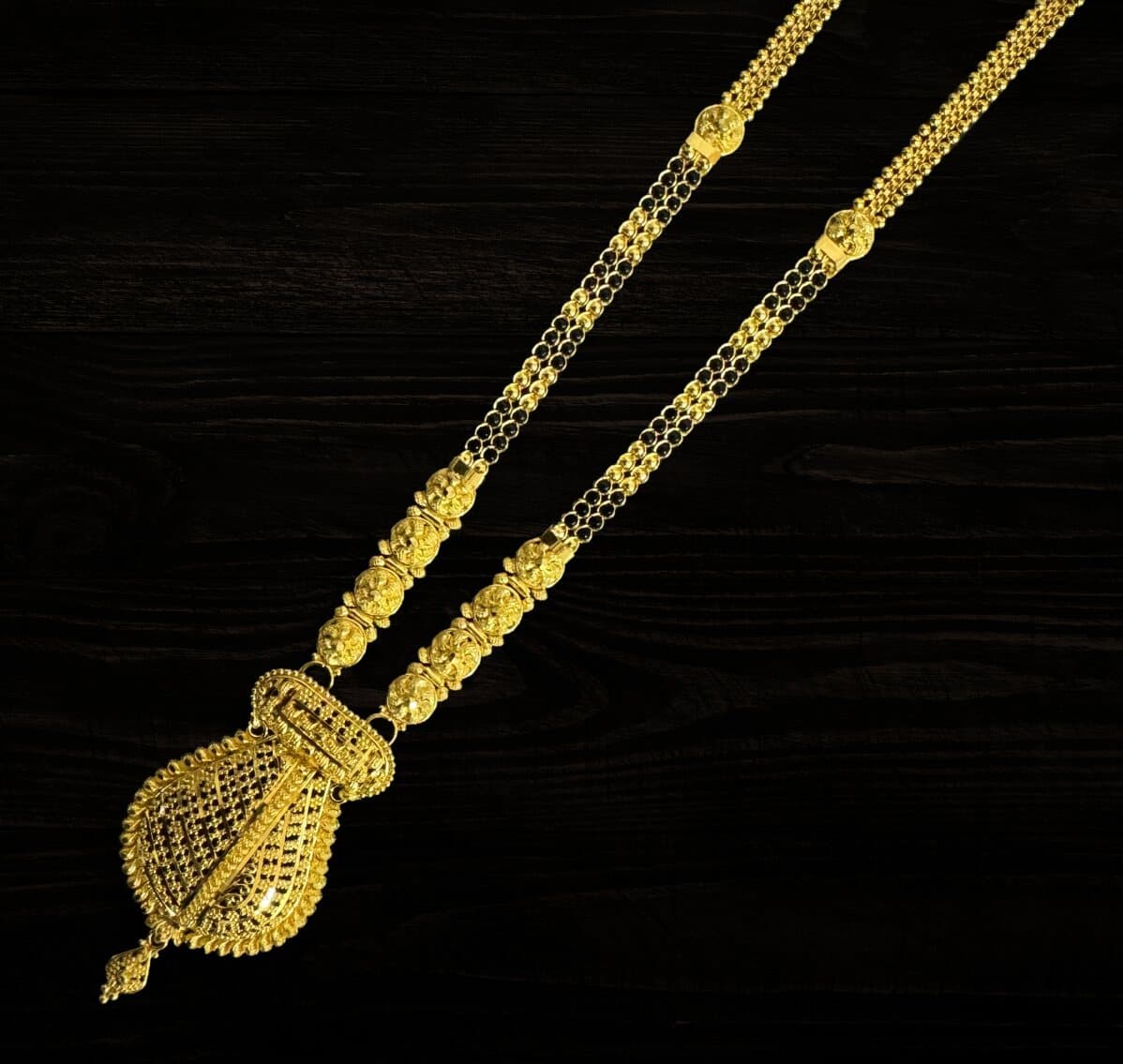
In many Hindu weddings, the groom ties a mangalsutra around the bride's neck during the ceremony. It is usually a string of black beads with gold, and married women wear it as a sign of their marriage. Designs vary by region, and in South Indian families it may be called the thali. Not every community uses one, so check with both families and with whoever is conducting the ceremony. We've written more about the mangalsutra and its styles.
Rings
For many couples, rings sit alongside these traditions: an engagement ring, then wedding bands for both. If you're choosing a diamond, our engagement ring buying guide walks through the basics and what to look for on the certificate.
Who gives what
This is where families differ most. Customs vary with religion, with which part of India a family's ancestors came from, and from one generation to the next. Speaking very generally:
- The bride's family often gives her gold as part of what she takes into her marriage. That might be the main set, bangles, or pieces passed down from her mother or grandmother.
- The groom's family often arranges the mangalsutra, since the groom ties it during the ceremony, and many also give the bride jewellery of her own, such as a set, bangles or a chain.
- Extended family and close friends tend to give smaller pieces: earrings, a ring, a chain or a pendant.
Your family may do it quite differently, and that's fine. The most useful step is to talk early. If both families are comfortable comparing notes, you avoid the bride receiving two very similar necklaces and nothing for her wrists.
It also helps to think about the whole wedding, not just the main day. Fiji weddings often include several functions, such as haldi and sangeet, and some South Indian families hold a paan ceremony where the families exchange gifts and blessings. Each one has its own outfit, so plan which pieces the bride will wear when.
Choosing the size of the set
Start with a rough budget. Heavier or more detailed sets cost more, and we'll show you options to suit whatever you have in mind. Then think about:
| Question | Why it matters |
|---|---|
| Will she wear it again? | A set she can wear to other weddings, pujas and Diwali gets far more use than one that only suits a bridal outfit. |
| Is it comfortable for hours? | Ceremonies are long. A very heavy necklace or tight bangles can become tiring. |
| How will it be stored? | 22ct is rich and pure, so treat it kindly. Fine, detailed pieces are happiest stored separately in their boxes. |
| Does it suit her frame? | A large piece can overwhelm a petite bride, and a fine one can look lost on a heavy outfit. |
Bigger is not automatically better. A well-proportioned set that the bride loves will be worn for decades.
Choosing the design
Let the bride lead. She is the one who will wear these pieces for the rest of her life, so her taste matters more than anyone's expectations.
Practical tips:
- Bring photos of the outfits, especially the neckline. A high neckline suits a long necklace that falls below it, or a short choker sitting above it; an open or deep neckline suits a choker or a set that sits close to the neck.
- Think about the hair. Large earrings work best when the hair is up or swept back.
- Get bangle sizes right before you shop. Measure an existing bangle that fits well. Bangles that fit well are comfortable all day.
- Mix the formal and the everyday. Alongside the main set, a simpler chain or pair of earrings will be worn far more often after the wedding.
Mixing heirloom and new pieces
Many brides wear something that belonged to their mother or grandmother, and it's one of the loveliest parts of a wedding. A few things make it easier:
- Bring the heirloom with you when you shop. Older gold can have a slightly different tone, and seeing pieces side by side is the only real way to judge a match.
- Check the stamp. An older piece might be 22ct or a lower carat. Lower-carat gold is paler, which matters if you want new and old to match closely.
- Give each piece its moment. If the colours or styles don't sit well together, the heirloom necklace could be the feature at one function and the new set at another.
- Layer with care. An heirloom chain can sit well with a new pendant, or old bangles can be mixed with new ones, as long as the tones are close.
iTaukei traditions and mixed families
Many Fiji families bring more than one culture into a wedding. In iTaukei custom, the tabua, a polished sperm whale tooth on a plaited cord, is presented at marriages and other important occasions, and a tabua known as the i duguci is presented to ask for a woman's hand. The formal engagement is sometimes called the ai lakovi. Tevutevu is an exchange of gifts such as mats, masi and household goods. These ceremonies are often combined with a Christian church service.
These are not jewellery customs, and gold doesn't take the place of any of them. Where a ceremony includes an exchange of rings, the ring advice above applies to iTaukei and mixed couples just as it does to anyone else.
Choosing your wedding jewellery at Shreeji Jewellers
Come in early, with the bride, photos of each outfit and its neckline, and any heirloom pieces you want to match. Bring a bangle that fits well so you can try sets and bangles in the right size, and ask to see the 916 stamp on each piece. You can browse our 22ct gold and bridal jewellery before you visit.